|
Author(s): George B. Dantzig
title: Linear Programming and Extensions Publisher: Princeton University Press Pages: xiv+627 Year: 1963 ISBN: 0-691-05913-6 (soft cover) URL: press.princeton.edu/titles/413.html Author(s): Roger Fletcher title: Practical methods of Optimization (2nd ed.) Publisher: John Wiley & Sons Pages: xiv+436 Year: 2000 ISBN: 0-471-49463-1 (soft cover) URL: eu.wiley.com/WileyCDA/WileyTitle/productCd-0471494631.html Author(s): Ronald E. Miller title: Optimization, Foundations and applications Publisher: John Wiley & Sons Pages: xvii+653 Year: 2000 ISBN: 0-471-32242-3 (hard cover) URL: eu.wiley.com/WileyCDA/WileyTitle/productCd-0471351695.html Short description: Bull. BMS: vol. 8(3) p.554, 2001 MSC main category: 49 MSC category: 49-01 Other MSC categories: 90C05, 65K10 |
|

Review:
Three books on optimization
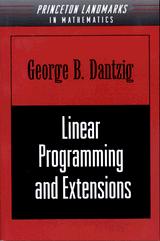
The first one is well known by the specialist. It is a bible of linear programming for several generations of students since it first appeared in 1963. Although there are many books in the vast literature on linear programming and even though new exciting methods have been found for solving the problem, it is still worthwhile to go back to the roots. It certainly fits in the Princeton landmarks series. Emeritus professor Dantzig is currently working on a basic three-volume work on this topic.
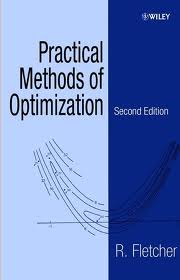
Fletcher's book appeared first in 1986 in 2 volumes, but the present one-volume edition is unchanged since 1991. Fletcher discusses practically important algorithms both for unconstrained and constrained optimization. The present paperback edition is a welcome addition to a reprinting history of a book that has reached the status of a modern classic.
The third book is new and is intended to be used as lecture notes for students outside the natural sciences. Therefore proofs are omitted where possible, or only given in an appendix. All the necessary mathematics are introduced: from linear algebra to derivatives, but mostly the approach is intuitive and often based on a geometric insight (for toy examples of dimension 2 or 3). Basic numerical techniques used for optimization problems such as root finding and the solution of linear and nonlinear systems of equations and iterative techniques in general are also included. The basic techniques for unconstrained optimization are logically placed here as well. These fundamentals fill up about half the number of pages. The ``real'' optimization problems and solution methods include linear programming (inclusive interior point methods) and constrained nonlinear programming. The examples are academic and do not come from an application area.
Reviewer: A. Bultheel (KU Leuven)
January 23, 2013